
Bwana Mkulima was a farmer in the Nandi Hills, a beautiful part of Kenya.
Bwana Mkulima knew many things. He knew he was lucky to live in Nandi, because elsewhere many African farmers struggled to make a living or lost their crops in droughts. In Nandi the climate was mild, despite being close to the equator, because the hills were high and the weather never got too hot.
Bwana Mkulima knew where the water-buffalo would come down to drink in the cool of the evening. By sniffing the air and looking at the sky he knew it would rain heavily before dusk, and by the way the weaver-birds were startled into the air from the jacaranda bushes around the village of Kijiji he knew a Mercedes Benz was about to drive up the dusty red murram road.
To be honest, the weaver birds only told Bwana Mkulima a car was coming; they did not tell him the car was a Mercedes Benz. Bwana Mkulima knew it was a Mercedes Benz because only one car ever visited Kijiji and that was the Mercedes Benz that belonged to young Bwana Tajiri.
Bwana Tajiri was the son of the tribal chief. He was said, usually by the chief, to be very clever; so clever he was sent away to school in Nairobi and after that to university in America. He had been away from the village since he was nine years old and by the time he came back at the age of twenty-three he had a wife and a son and a great big Mercedes Benz.
Of course Bwana Tajiri didn’t come back to live in the village; he was far too important for that. He lived in a big house in Nairobi, surrounded by a shady garden with pawpaw and guava trees. He had an important job working with important people. But he came to visit the village every now and again so all the farmers could see what a big and important man he was.
Usually Bwana Tajiri would arrive in the village about noon, just in time to refuse to share in the simple meal prepared by the villagers because he had brought a lunch hamper packed by the most expensive grocer’s shop in Nairobi. The lunch hamper cost as much as Bwana Mkulima earned in a year, but Bwana Mkulima was happy with his life and not jealous.
For some reason, on this day Bwana Tajiri was very late; it was about half an hour short of sunset. He and his family got out of the car. They went over to the chief’s house. Then they promptly started arguing with each other, paying no attention to Bwana Mkulima.
“We should have gone straight back to Nakuru after watching the flamingos,” Mama Tajiri shouted. “It’s silly to come here at this hour. We’ll never get back in daylight.”
“Nonsense,” Bwana Tajiri shouted back. “It’s only twenty miles. This Mercedes can do over one hundred miles an hour.”
The little boy, Mtoto Tajiri, did not shout at anyone, but he did begin to cry.
Bwana Mkulima thought he would try to be helpful. “Bwana Tajiri,” he said politely, “I hope you are well.”
“Um.”
“Your wife and child are well?”
“Um.”
“Your job goes well?”
“Yes, yes,” replied Bwana Tajiri angrily, for he had no patience with all that old-fashioned politeness. He did not ask whether Bwana Mkulima was well, nor even whether Bwana Mkulima’s cattle were well. This was terrible rudeness, but Bwana Tajiri was young and Bwana Mkulima expected he would learn better manners one day.
“We came to see Mzee,” Bwana Tajiri said, waving a hand towards the chief’s house, “he doesn’t seem to be at home.”
“Alas,” said Bwana Mkulima, “he went to Shambani at first light to arbitrate a dispute. An old man has died and his two sons argue over ownership of the Zebu Bull.”
“Bah!” Bwana Tajiri scowled. “Ugly hump-backed creatures.”
“Perhaps he will be back before nightfall,” Bwana Mkulima suggested.
“We can’t wait.” Bwana Tajiri shook his head dismissively.
Bwana Mkulima tried to explain the problem he foresaw. “Sadly there is no possibility of reaching Nakuru by road tonight, Bwana. Perhaps you and your family would be willing to share my evening meal and spend the night at my house?”
“Impossible!” said Bwana Tajiri.
“Impossible!” said Mama Tajiri.
“Waaaaah!” wailed Mtoto Tajiri.
None of them thanked Bwana Mkulima for his offer or apologized for refusing. Instead Bwana and Mama Tajiri shouted at each other for several minutes more and Mtoto Tajiri wailed for several minutes more. Then they all got back into the Mercedes and roared back down the red murram road without so much as a word to Bwana Mkulima.
Bwana Mkulima sighed. He turned and walked slowly back to his house. It was a nice house, though not of course as grand as Bwana Tajiri’s house in Nairobi. Bwana Mkulima had never been to Nairobi. However he had often walked to Nakuru on market days, both the long way by road when he had cattle to sell and by the shortcut through the hills.
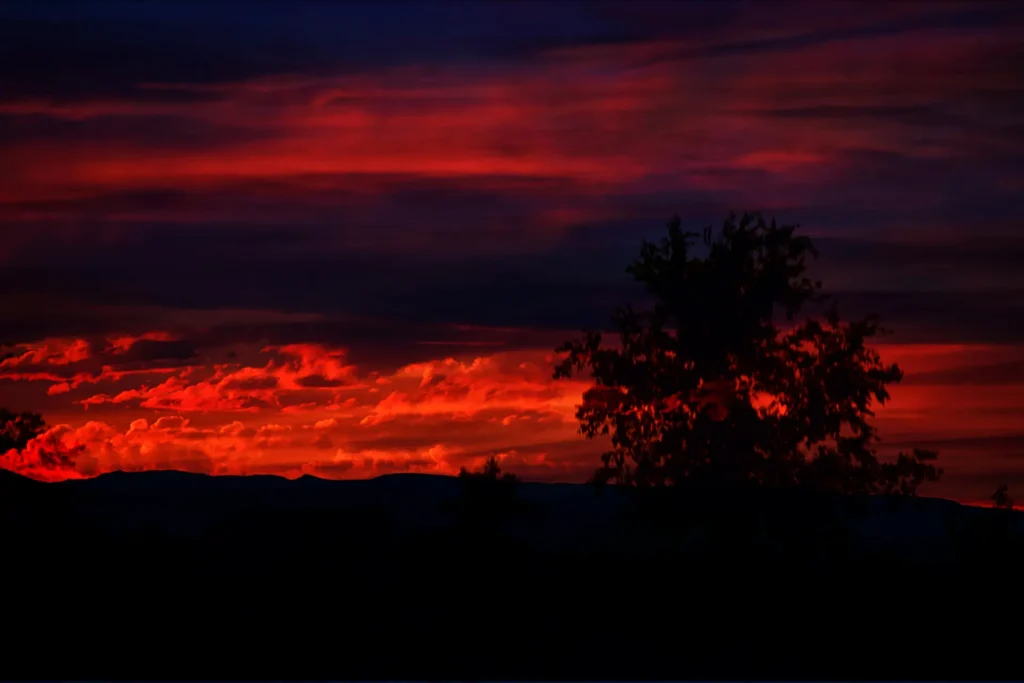
Almost before Bwana Mkulima reached his house, heavy raindrops began to fall as the sun settled to the horizon.
Next morning Bwana Mkulima got up bright and early and walked by the shortcut to Nakuru, even though it was not market day. He went straight to the garage of Bwana Mhandisi, who had a breakdown truck.
“About half way down the road to Kijiji,” he told Bwana Mhandisi, “you will find young Bwana Tajiri and his family with their Mercedes Benz, stuck in the black-cotton soil that always turns to bottomless mud when it rains. I did tell them there was no way they could drive to Nakuru last night, but they wouldn’t listen.”
“That’s young people today for you,” Bwana Mhandisi sighed.
“Yes.” Bwana Mkulima nodded. “They always think they know better than their elders.”
Leave a Reply
Log in or Join the Crew to leave a comment.